
How to Measure, Build & Install Window Screens — Free DIY Guides
To measure a window for a replacement screen: measure the width at top and bottom of the screen channel (use the smaller number), measure the height on both sides (use the smaller number), measure in inches to the nearest 1/16", and note the channel type. For doors: measure frame opening width inside edge to inside edge, height from threshold to top, and note handle side. Always measure twice — custom screens cannot be returned.
Everything you need to measure, select, and install your screens — no phone calls required.
How to Measure Your Screens
Accurate measurements are the key to a perfect fit. Follow these steps for windows and doors.
Window Screens
- 1.Measure the width at the top and bottom of the screen channel — use the smaller measurement
- 2.Measure the height on both left and right sides — use the smaller measurement
- 3.Measure in inches to the nearest 1/16"
- 4.Take note of the lip/channel type (standard, flush, etc.)
Door Screens
- 1.Measure the door frame opening width (inside edge to inside edge)
- 2.Measure the height from the threshold to the top of the frame
- 3.For sliding doors: measure the track width and height
- 4.Note which side the handle should be on
Pro Tip
Always measure twice and order once. We manufacture to your exact specs — there's no way to return a custom-sized screen.
Choosing the Right Mesh
Different mesh types serve different purposes. Here's how to pick the right one.
Standard Fiberglass
Best for most residential applications. Economical and effective.
- • Good visibility and airflow
- • Easy to install and repair
- • Most affordable option
Pet-Resistant Mesh
Heavy-duty vinyl-coated polyester that resists scratches and tears.
- • 7x stronger than standard mesh
- • Resists pet claws and jumping
- • Slightly reduced visibility
Solar Shade Mesh
Blocks UV rays and reduces heat while maintaining airflow.
- • Blocks up to 80% of UV rays
- • Reduces glare and heat
- • Great for south-facing windows
Aluminum Mesh
Durable metal option for high-traffic or security applications.
- • Won't sag or stretch over time
- • Fire-resistant
- • More visible than fiberglass
How to Install Your Screens
Installing screens is straightforward. Here's what you need to know.
Tools You'll Need
- • Spline roller tool (included in kits)
- • Utility knife or scissors
- • Flat work surface
- • Clamps (optional but helpful)
Installation Steps
- 1.Assemble frame pieces using corner connectors
- 2.Lay mesh over frame with 1" overhang on all sides
- 3.Starting at one corner, press spline into the channel with the roller
- 4.Work around the frame, keeping mesh taut
- 5.Trim excess mesh with utility knife
- 6.Install pull tabs or hardware as needed
Common DIY Mistakes to Avoid
Save yourself time and frustration by avoiding these common pitfalls.
Measuring the old screen instead of the frame
Old screens may have stretched or shrunk — always measure the frame opening.
Using the wrong spline size
Spline that's too small won't hold; too large and it won't fit. Match your frame channel.
Pulling mesh too tight
Over-tensioned mesh can warp the frame. Keep it taut but not stretched.
Not accounting for frame corners
Make sure corners align properly before starting the spline.
Do You Need a Sill Adapter?
Retractable screens mount to a flat, flush surface on all four sides — like a picture frame. If your door opening doesn't have this, you'll need a sill adapter.
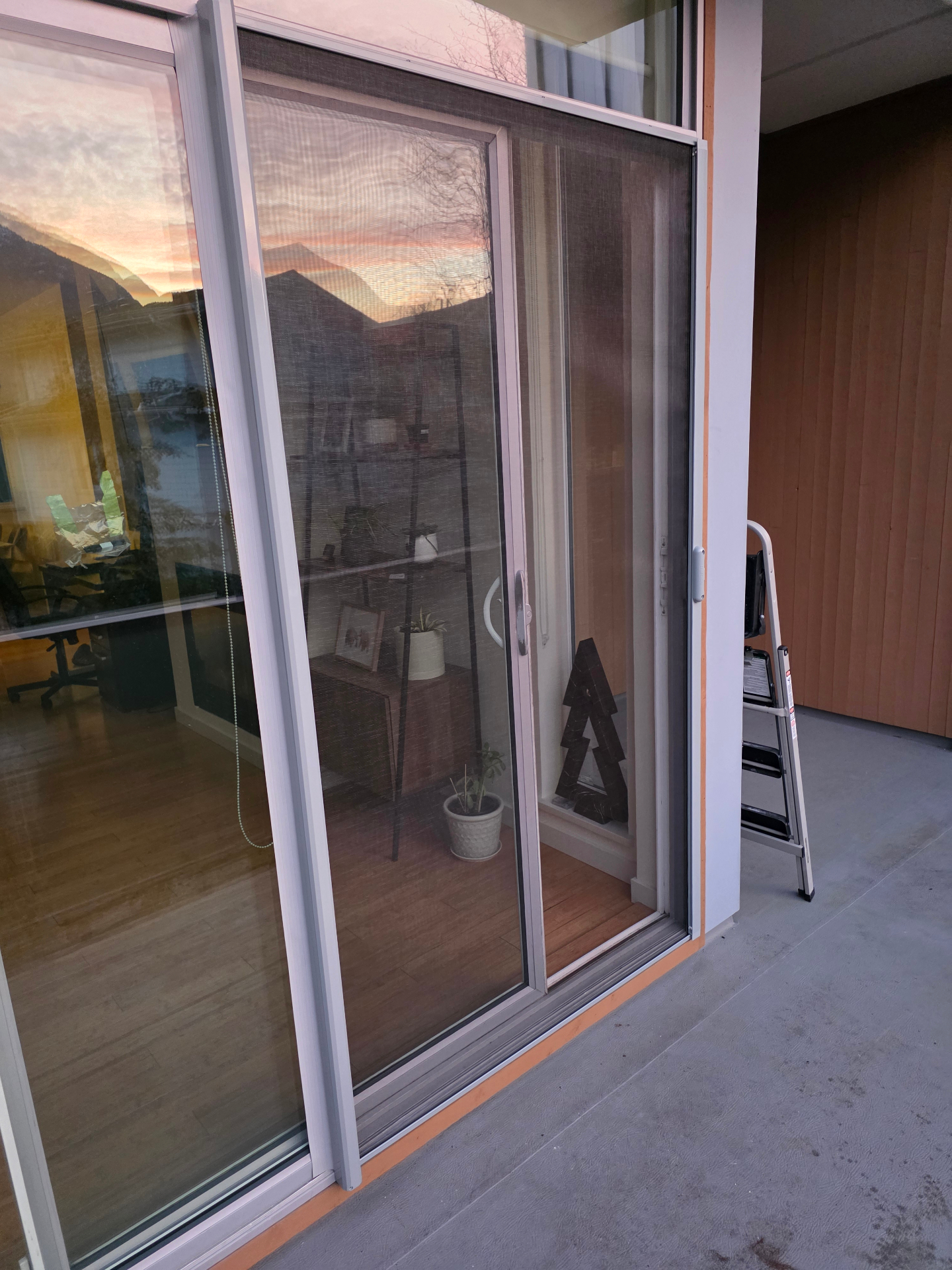
Full door view
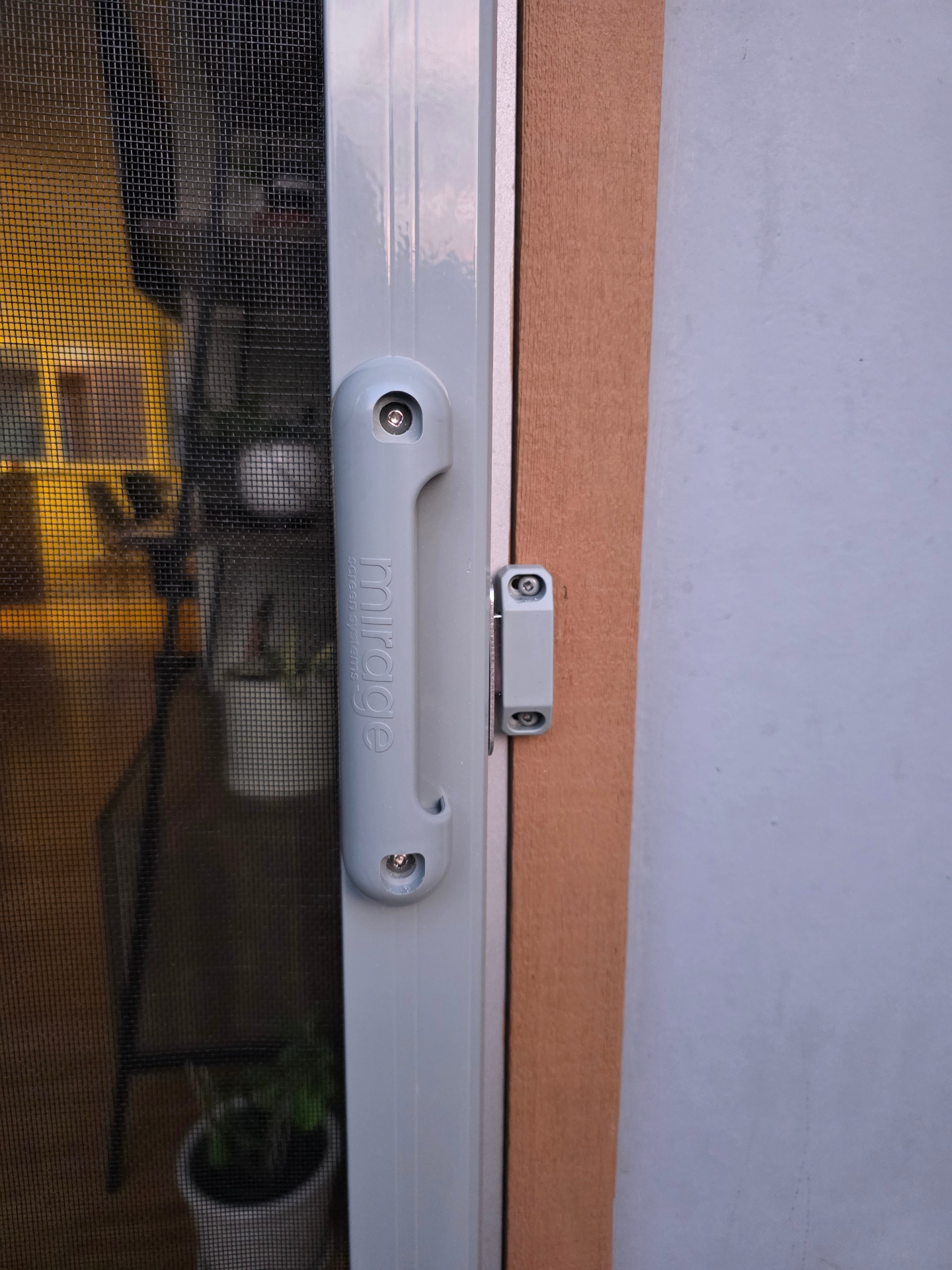
Handle detail
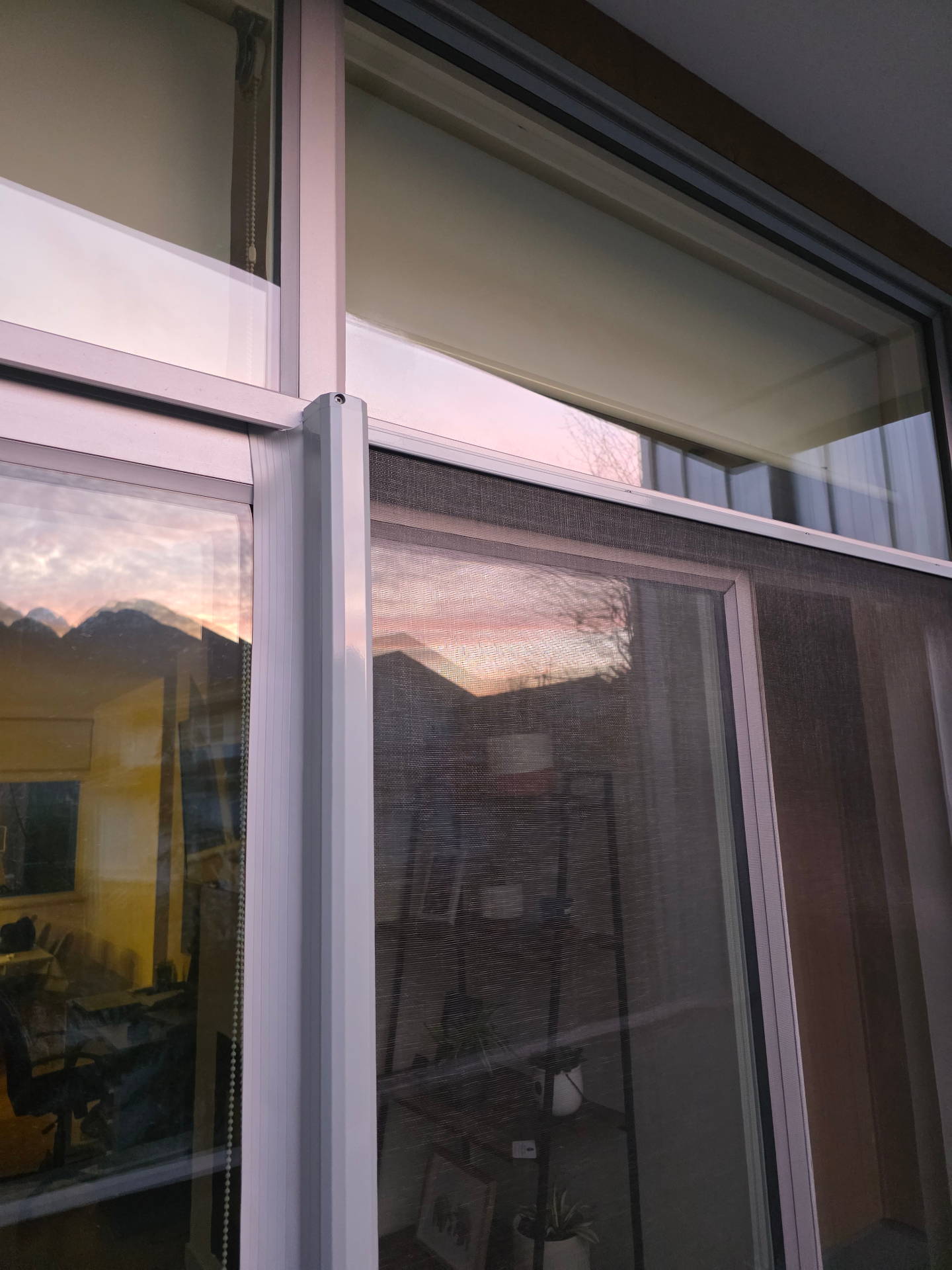
Side track mounting
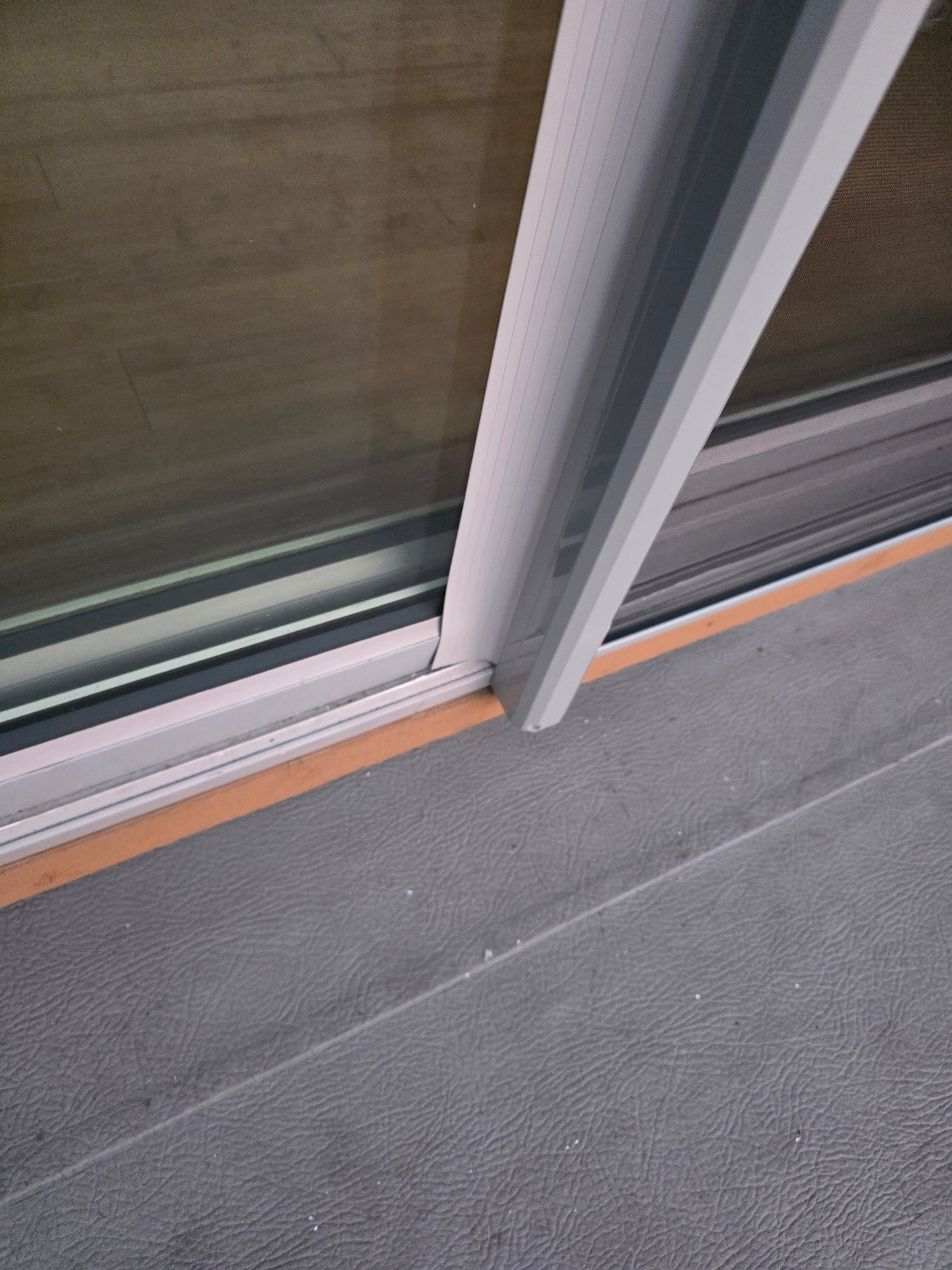
Sill/threshold detail
No Adapter Needed
Your opening is ready for direct mounting if you have:
- Flat, flush surface on all four sides
- Threshold is level with your floor or deck
- Standard sliding door frame with even tracks
- Opening resembles a "picture frame"
Sill Adapter Required
You'll need an adapter if your opening has:
- Recessed or sunken door track
- Sloped or angled threshold
- Missing flush surface on any side
- Uneven or textured mounting surfaces
Need a Sill Adapter?
Sill adapters are custom-made to fit your specific opening. Contact us for a quote.
Mesh Type Comparison
| Mesh Type | Best For | Strength | Visibility | Price | UV Block |
|---|---|---|---|---|---|
| Standard Fiberglass | Most homes, general use | Good (3-5 years) | Good | $ | Minimal |
| Pet-Resistant | Homes with cats or dogs | 7x stronger than standard | Slightly reduced | $$ | Minimal |
| Solar Shade | South/west windows, hot climates | Good | Reduced (tinted) | $$ | Up to 80% |
| Aluminum | High-traffic, security | Excellent (10+ years) | Good | $$ | Minimal |
| No-See-Um | Near water, heavy mosquito areas | Good | Slightly reduced | $$ | Minimal |
| BetterVue Invisible | View-critical windows | Good | 20% better than standard | $$$ | Minimal |
Ready to get started?
Start Your Order